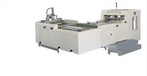
Industrial automation is a variety of parameters in industrial production for the purpose of control, to achieve a variety of process control, in the entire industrial production, as far as possible to reduce the operation of manpower, and can make full use of animal energy and a variety of information to carry out production work, that is, industrial automation production, and make industrial automatic production process known as industrial automation.
Industrial automation industry research
The upstream of the industrial automation industry is the manufacturer of automation hardware and software. At present, the industrial automatic control system equipment manufacturing industry is still dominated by foreign capital, but the market share of domestic enterprises is increasing, and the import substitution is in the accelerated stage. There are mainly two categories in the middle stream of the industry. One is the product distributors who prefer channels. The second focuses on the technology application of the system integrator. Downstream customers of the industry can be divided into OEM type and project type. OEM market is mainly for customers of mass production automation and intelligent manufacturing equipment. Project-based marketing refers to the design and implementation of overall engineering automation systems.
The downstream demand for industrial automation products mainly comes from the OEM market and the project market. OEM markets include machine tools, wind power, electronic manufacturing equipment, spinning machines, etc. Project markets include electric power, chemical, municipal, metallurgy and other fields.
The vigorous development of Chinese manufacturing industry, led to the widespread application of industrial automation technology. In addition, the continuous growth of human capital, market demand for product quality, manufacturing accuracy, also drive the industrial automation market scale is growing.
Industrial automation industry development trend
Localization is an endogenous, continuous, accelerated and irreversible dominant trend. In the process of rapid product iteration, positive customer response and cooperative research and development, local manufacturers have achieved the technical level, high-dimensional solutions and stronger customer stickiness, which are no less than foreign investment. Therefore, localization is expected to continue to advance at a high speed.
The core of intelligent manufacturing is digital, and the premise of intelligent manufacturing is automation. Local industrial control manufacturers are expected to rely on process understanding and data interface to open the second growth curve of digitalization.